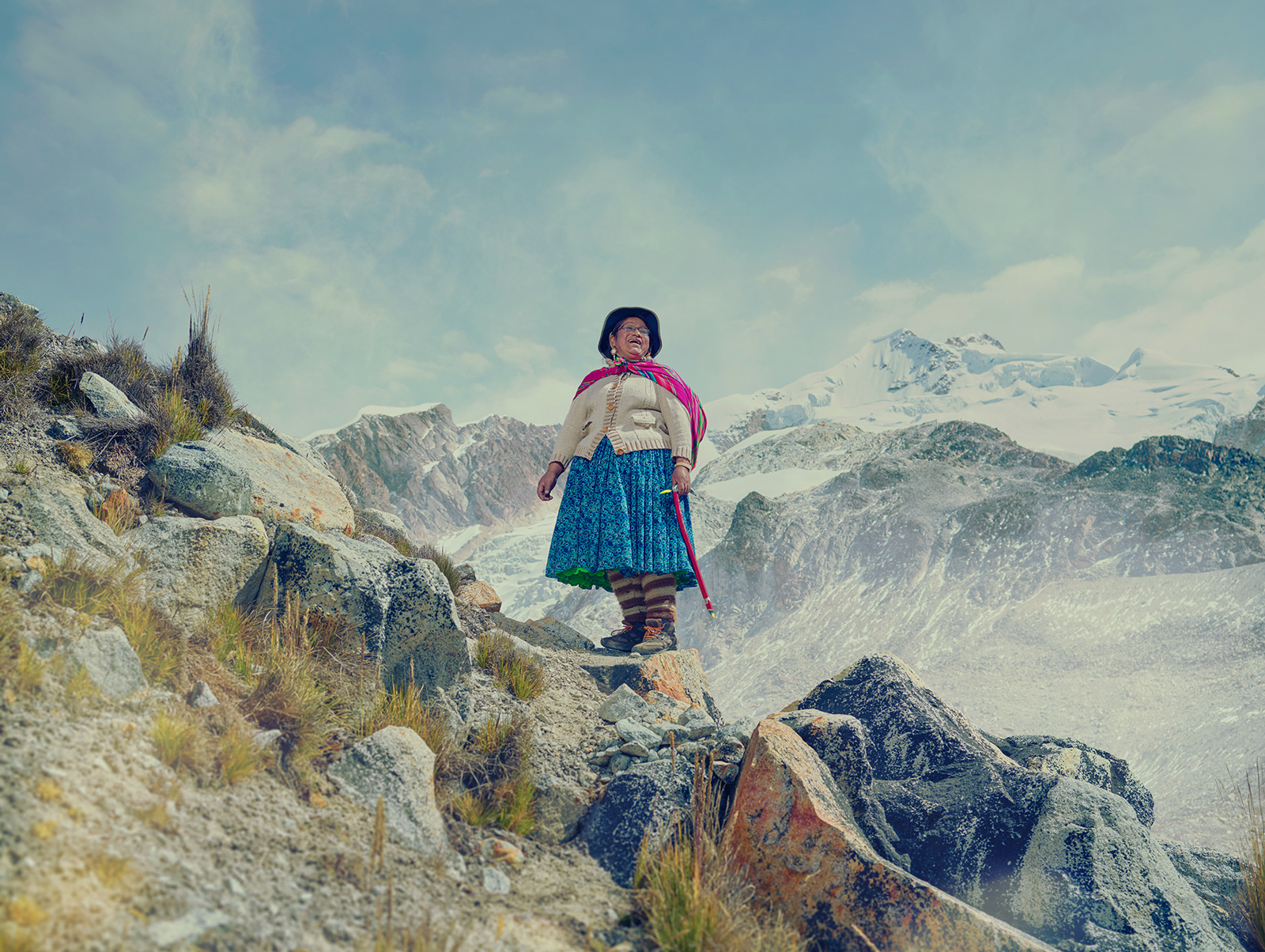
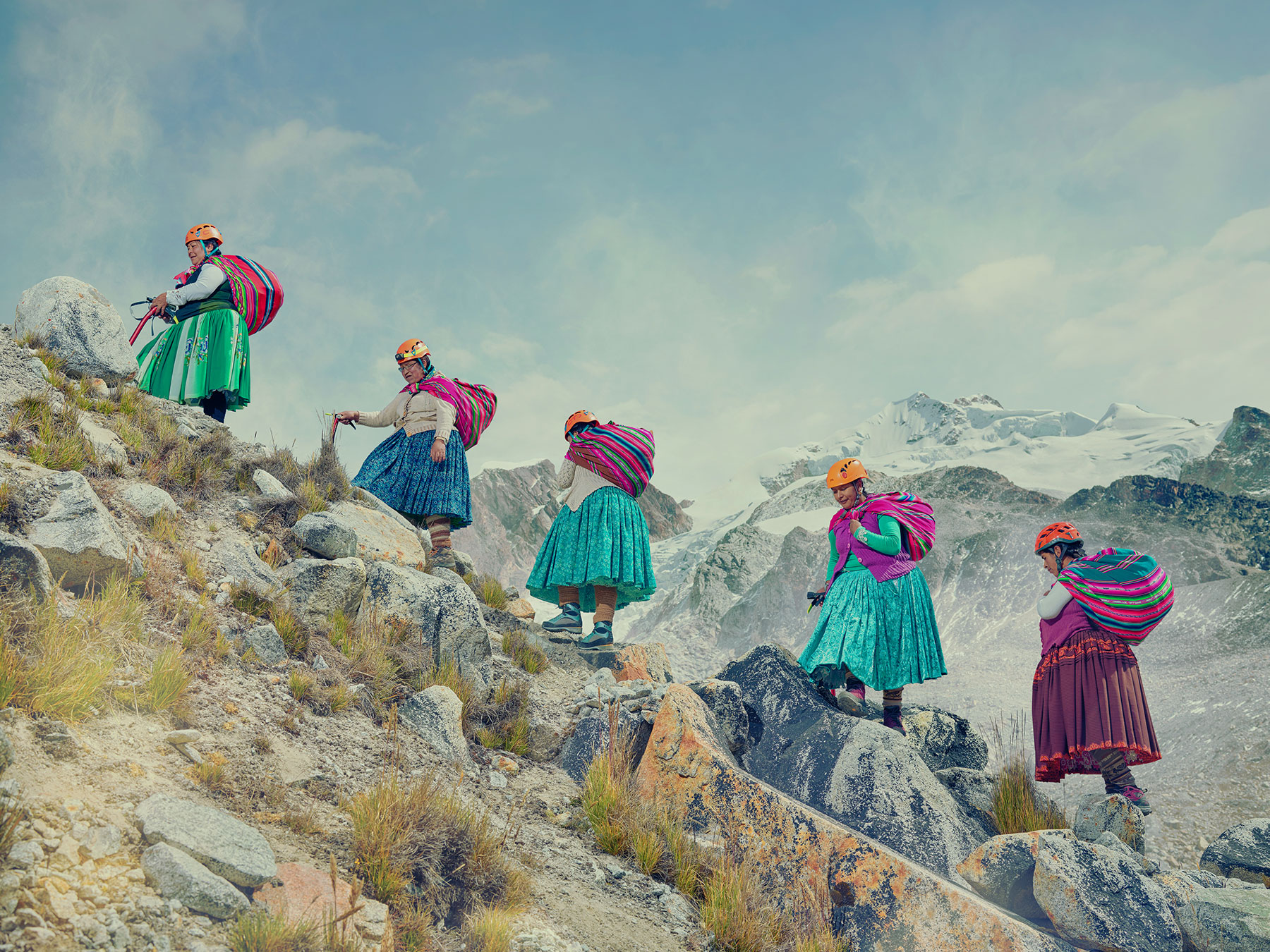
The Cholita Climbers are a group of Aymara indigenous women from Bolivia who are rewriting the narrative of what it means to be a woman, an indigenous person, and an adventurer. In January 2019, they climbed the 22,841-foot summit of Mt. Aconcagua in Argentina — the highest mountain outside of Asia — not in high-tech climbing gear, but in their traditional, vibrant, billowing dresses and bowler hats. Their colourful shawls carried the ropes, food, and equipment needed for the ascent, rather than modern backpacks. In doing so, they quite literally carried their culture to new heights.
The word cholita was once used as a slur, a way to diminish and demean the indigenous Aymara women of Bolivia. Today, these women wear it with pride — reclaiming the term as a symbol of strength, heritage, and defiance.
Not long ago, as recently as a decade past, Aymara women in Bolivia were openly discriminated against. Easily recognised by their wide skirts, braided hair, and distinctive hats, they could be denied service in restaurants, refused access to public transport, and even barred from entering central public spaces like Plaza Murillo in La Paz. The exclusion was both social and systemic.
Yet, these women have never been silent. Since the 1960s, they have been organising, marching, and fighting for recognition. Their struggle gained momentum in 2005 with the election of Evo Morales — Bolivia’s first Indigenous president — which brought greater autonomy and visibility to the country’s majority Indigenous population.
Today, the Cholita Climbers’ story sits at a powerful crossroad: women’s rights, Indigenous rights, and climate justice. Their climbings are not only physical feats, but acts of protest and visibility — a way to challenge stereotypes, reclaim space, and inspire the next generation to rise, in every sense of the word. The Cholita Climbers’ journey didn’t begin on a windswept ridge, but in the kitchens and base camps of Bolivia’s mountains. Many of these Aymara women worked as cooks and porters for male climbers, their role confined to supporting others’ adventures. In 2015, they decided to climb for themselves, led by Lidia Huayllas Estrada. That year, eleven women summited Huayna Potosí
(6,088 m). From that first ascent, the Cholita Climbers went on to conquer Bolivia’s highest peaks — Sajama, Illimani, Acotango, Parinacota, before moving on to conquer Mt Aconcagua. Each climb a defiance of both altitude and prejudice.